Hello World – How are things going for everyone? As we roll from October into November, signaling the beginning of another holiday season, we want to share our inspiration, hope, and love to each of our friends near and far.
Our November Newsletter went out last week. If you are not getting our monthly updates, please DO sign up for our newsletter using one of the links here on our website:
The Annual Academic MoM Conference will take place in person and online in 2023. Call for papers is posted. This annual event is a collaborative effort with artists and academics to create experiences that are both educational and artistic in nature, contributing to the body of work that comprises a vast field of mother studies. CFP due by November 30th! Link to CFP.
The 7th Issues of the Journal of Mother Studies is now live and available to read. This journal is a peer-reviewed, international, interdisciplinary open-access, digital humanities hybrid project focused on Mother Studies, a field of study devoted to the issues, experiences, topics, history, and culture of m/others, mothering, and motherhood. Special thanks to our editor Nicole Musselman! Read more.
You’re invited to join the St. Petersburg Mothers’ Club, where everyone is welcome. If you crave connection, heartfelt conversation, and an opportunity to explore the nuances of m/otherhood while navigating your individual well-being, this is the place for you! Read more.
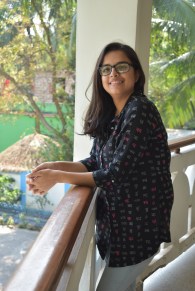
We welcomed another intern this fall. Гердт Мария has been diligently combing through some of our more advanced texts to facilitate a new round of MoM classes in the new year. We hope to synthesize her research with existing coursework in order to launch an easily accessible class in mother studies for all to see. She has been diligently translating portions of the book the Women Founders by Patricia Madoo Lengermann, Gillian Niebrugge. Now more about Maria:
My name is Maria, I’m a second-year undergraduate student at Higher School of Economics in Moscow. I’m a sociology major and a pubic history minor. I’m passionate about women’s rights, female literature and art, especially representing relationships between mothers and daughters or sapphic relationships, but I generally find women’s studies and herstory an inspiring and fascinating academic field. I’ve written multiple student’s papers on the topic, published two articles, and always try to support feminist initiatives in my city and my country. I’m also curious about politics and political theory, love reading, watching movies, attending galleries. I’ve always found it frustrating how women’s voices get ignored or stolen and I’m grateful to MoM for an opportunity to discover and share the lives and ideas of great female sociologists.
Coming in January 2023…
MoM welcomes Laura Gabrielle from Portland, Oregon. Laura is a graduate student in museum studies. She enjoys attending music and art events, discovering new cafes, or spending time at home with books and films. She especially loves historical dramas with good costume design! Being in the Pacific Northwest, she appreciates living in close proximity to the coast, mountains, and rivers for outdoor activities. Her research project will be dedicated to the erased history of women’s input in sociology and social theory starting with 19th century. As a research assistant, Laura will help create content for a booklet that will be incorporated within a 4-week class at Museum of Motherhood.
That’s it for now. Have a busy and blessed November – We’ll see you soon!
There is always plenty to do around this house! At MoM, we continue to be actively reviewing multiple infrastructure definitions, fundraising initiatives, and plans for growth. In the meantime, creating compelling content and opportunities to connect virtually and in-person are essential.
JOIN US (Wed) JUNE 22 6:30-8PM EST for a community talk and discussion on Zoom at our *NEW COMMUNITY. We invite you to pre-register for this FREE workshop. RSVP on the community site with Dr. Roksana Badruddoja.
DR. ROKSANA BADRUDDOJA WORKSHOP EVENT ON OUR COMMUNITY NETWORK: Reproductive trauma-from loss of children to obstetric violence-has an epigenetic impact. In her upcoming MOM Community talk on June 22, 2022, at 7 p.m. EST, Roksana Badruddoja will discuss how trauma changes our gene 🧬 expression/informs how we show up in the world and how we can recover ourselves. Available on our *NEW COMMUNITY SITE. Register now for FREE opportunities to collaborate, communicate, and present. We look forward to connecting over the miles. RSVP.
OUR MULTIPLE INITIATIVES AND WORKS IN PROGRESS:
MEMBERSHIPS: Finally! Memberships have arrived (although they have not launched yet, we should have this functional opportunity ready to launch within the next few days). We are so pleased to announce this new addition to our museum initiative. Now we can better build together. Whether it’s a private tour you’re looking for, access to our conference, newsletter, community or legacy membership – you asked – we’ve got it covered. Please prepare yourselves to sign up for a membership and help us grow, grow, grow. Pick the annual membership that’s right for you by clicking here.
DEFINITIONS: Womyn, m/others, reproductive identities, the Journal of Mother Studies and more. How do we create conversation on these ideas and identities? First, let us begin by understanding from a broad perspective what we are attempting to dialogue about. We will continue examining these topics throughout the 2022-23 year. Read more here.
BECOME AN ALLY: Sign our new ally letter as we build MOMentum in St. Petersburg for the Museum and Motherhood. After meetings with our local council-persons we have learned that on the ground advocacy can result in impact. Our goal is to share your support with our local officials for increased funding. Thank YOU! Sign our petition here.
GUIDESTAR: Our non-profit profile is up at one of the premium portals for fundraising initiatives. While we still gotta get some numbers posted, we aim to do that over the next few months. The more we raise, the more we can brag! Read more here.
Lastly, shout out to a friend: MAKE ART/ NOT SAD panel discussion that is taking place this Sunday 19th June in England. Register for free at following the eventbrite link and find out more.
With the goal of sparking conversations around the topic of caregivers, breadwinners, and family policy, film director Bonnie Silvestri hosts an online film screening and post-film talkback.
The film Funnel of Dreams follows Silvestri, her husband, and their child on a quest to understand the United Kingdom’s policies for families. These policies include paid parental leave, childcare services, and the children’s right to play.
This way of life is often featured in academic presentations about Scandinavian countries, but in this film the Silvestris investigate how paid family leave affects families in the United Kingdom while they spend time together.
“In the midst of a global pandemic, we wanted to think about our work/home life paradigm and how we might improve things for a better future,” says Bonnie. “In our film, we dive into the history of motherhood, the struggle for women’s rights, and the issues related to family leave in the lives of working parents.”
Bonnie continues “When we became parents, we were surprised to learn that the United States is the only industrialized nation not providing paid family leave.”
She explains, “We wanted to learn more about a country with a robust framework for new parents. Our short documentary film explores our personal experience with our young daughter living overseas along with interviews with parents, policymakers, and other experts.”
The film was an official selection of the Through Women’s Eyes International Film Festival, Social and Economic Justice Festival, and the International Social Change Film Festival among others.
For over a decade Bonnie has taught courses including Women and the Law at the University of South Florida Sarasota-Manatee and won the 2015 Graham-Frey Civic Award from the Florida Campus Compact for outstanding contributions to the development of civic learning and engagement in sustaining participatory democracy.
Funnel of Dreams is 34 minutes in length and will be screened in our Zoom room (LINK IS HERE/ JOIN AND RSVP) at the MOM Community site on Sunday May 22. The film will be screened first with a discussion to follow for a total of 90 minutes beginning at 7PM and ending at 8:30PM EST. Hope you can join us!
Of course, one day there will be a museum collection about the pandemic. In fact, they’re working on it right now, collecting the pieces of a crisis as it unfolds in the hope that somehow it won’t get lost in the movement of time, that one day we will see ourselves or have ourselves be seen.
But knowing that history involves selection, that some pieces of memory will necessarily be chosen over others and therefore some of us will blow away, I want to show a vision of my life, my family’s life over the last two years. It could be two years, one or three because who knows? It has been a time, in which time has been lost. Each day seems the same and yet things move forward.
These things are my daughter’s/mine/her Dad’s. These moments are my own, enmeshed in the fabric of my family.
I don’t want our memories to be swallowed up by that terrifying giant; the pandemic; our experiences to be defined by a turbulent era of history. The little things that together make up our lives, have been injured, but still, those little things keep breathing. Most of the time they drag themselves, tired and bloody, but now and then, they unleash a triumphant boogie.
Our ginger tomcat died. The neighbour’s house was torn down. Adult teeth erupted, school started, stopped and started again. And the things in-between.
Here is my vision. A basket of things from me to you.
Rebecca Louise Clarke is an author, scholar and media artist who is interested in the ways mothering and memory are depicted in museums. Her book Representations of Mothers and the Maternal in Museums, to be published in early 2023 by Routledge is currently in development and examines the ways mothering is represented in museum collections and exhibitions. During her residency with the Museum of Motherhood (M.O.M.), Rebecca is doing an in-depth case study of M.O.M. Her analysis seeks to discover ways that experiences of mothering as voiced by mothers themselves, can challenge heteronormative, stereotypical ideals about motherhood and how innovative museum practice can disrupt conventional ideals about motherhood.
If you are interested in applying for a guest residency here at MOM, please go to our website HERE: https://bit.ly/3uRgugm to find out more. BE SURE TO HURRY! Spots have been filling FAST! We hope that future tours of the space will be available soon, but they are by appointment only in Artist Enclave Historic Kenwood: “where art lives.”
I’ve always thought high-heeled shoes were ridiculous. Pretty women teetering on stilettos, inviting bunions, rushing about, that kind of beauty hurts. As it turns out, males in the Persian Empire first wore elevated soles in the 10th Century. The term, killer heels exemplify the fact that warriors used them to grip stirrups while riding ponies into battle. High-heels, as we know them today, weren’t invented until 1954, epitomizing an era when women were viewed as lovely vapid accessories.
2020 was not a good year for shoes. 2021 is not looking too hot either. Social activities have been curtailed. City streets are empty. COVID has presented unique challenges. While some hunker down, essential workers keep our country going. Teachers, first responders, delivery people, and health care practitioners (to name a few) perform the tasks necessary so that schools and emergency services are accessible.
I am a mother whose kids are grown. Under usual circumstances, our family spends lots of time together. We share vacation-time in Florida, gathering in the kitchen- cooking big home-style meals, engaging in loud, argumentative discussions about sports and philosophy. Now, life is weird. We wander around in slippers or even barefoot, wearing pajamas from the waist down, doing business on laptops, and Zooming with each other on weekends.
My daughter lives on the other side of the continent. She graduated nursing school this spring earning a residency in the emergency room of a hospital in Southern California. We have never been separated for more than a few months. Now, we are entering our second year of distanced communication. I mail her gifts. Vitamin packs, including zinc, D, and elderberry. She hustles through twelve-hour shifts. Working conditions have deteriorated over the course of many months. The entire hospital is overwhelmed and understaffed.
As the healthcare system topples around her, my daughter continues to push hard. She tells me about the chaos, the missing PPE, and the hallways filled with people. She is a warrior and I know she went to school because she believes in social justice and healthcare for all. Her uniform includes scrubs, gloves, a visor, and a mask. On her feet are white rubber clogs.
This New Year’s Eve, I was hoping for a new chapter in the story. Surely the release of the COVID vaccine and the end of the current political regime would bring a brighter day. I went to sleep at midnight, waking in the early morning to a group text from my daughter, sent to the entire family. The keys lit up at 6 AM, reminding me that sometimes things get worse for a time before they get better.
She texted: 2 firecracker victims, 4 stabbings, and my friend is intubated with COVID. Then six hours later she followed with, Meth lab explosion, two more COVID, two deaths. Finally, at the end of her shift, with nine understaffed workers in a fifty-bed emergency room, after only two months into her new job, she phoned exhausted in tears.
Optimism is hard to come by right now. I have to remind myself, the women in my family are warriors. As a proud feminist who has passed some of these qualities along, I hope her stamina for social change will stay intact, even in the midst of a crushing pandemic. It is challenging to be optimistic when metaphorically the house is on fire. I set my sites on the future, yearning to hug my beautiful daughter again. Then, perhaps my sense of humor will return, and joyously we can kick up our well-heeled souls once again.
Photo: Shoe credit SPERA
BIO: Martha Joy Rose is a scholar, artist, and activist. She founded MaMaPaLooZa, after touring with her band Housewives On Prozac (1998-2008) and began work on the Museum of Motherhood (MOM) in 2003. The MOM Art Annex is currently in St. Petersburg, Florida with ongoing artist in residence initiatives and exhibits focused on elucidating the art, science, and history of mothers, fathers, and families. Rose teaches sociology at Manhattan College and holds an advanced degree in mother studies from CUNY, GC. Rose is the NOW-NYC Susan B. Anthony awardee (2009), has lectured extensively and served as founder of the Journal of Mother Studies. She has been organizing the international Academic MOM Conference each year since 2005. She is a co-editor of the Music of Motherhood (Demeter Press (2018), a contributor to the Encyclopedia of Motherhood (Sage 2011), and her work has been featured in the Mom Egg Review to name a few. She is currently at work on a memoir.
Our Bodies, Ourselves was written by The Boston Women’s Health Collective in 1970, with the goal of promoting women and girl’s health, reproductive rights, and sexuality. The knowledge presented was radical for its day, illuminating topics as varied as masturbation and abortion.
To quote the Los Angeles Times, “Forty years ago, a copy of “OBOS” on the shelf signified you were a certain type of woman — curious, and unashamed of it. In control. You were not the high school junior who was clueless about sex and pregnancy and missed six months of classes due to “mono.”[1]
Three years after Our Bodies was published, abortion in America became legal with the passing of Roe Vs Wade.[2] Sex education programs in classrooms had been gaining in traction in schools since the 1960s.[3] However, controversy about girl’s bodies and who controls them has continued to be a topic of debate and public discourse.
Even in 2020, there is still growing pressure for women to get plastic surgery and sexual images shown on media pressure teenagers to engage in certain behaviors. While there have been many systemic changes, teenage girls’ vulnerability to STDs, ongoing pressure to have sex at a young age, and unrealistic beauty standards haven’t changed enough. Society continues to evolve, but when it comes to recognizing individual’s personal choices there is still room to be more inclusive.
Early versions of Our Bodies, Ouselves did not include information about transgender identities, environmental concerns, or mental health advice. However, the writers have since expanded their knowledge. In 2020, Our Bodies, Ourselves launched a website. Today, they give well-researched advice, on health, sexuality, and wellness for women, girls and also transgender people.
Throughout the years, The Boston Women’s Collective has inspired health care policies, research on women’s health, feminist activism, feminist studies, health care, and health activism. Prior to the publication of this seminal piece of literature, in many parts of the world, sexuality as well as reproductive rights had many negative associations.[4]
I have grown up in an era of increased knowledge. Gone are the early-day doctors who focused on women’s reproductive value, and used “hysteria” as a diagnosis, which minimized women’s emotional wellbeing and invalidated women’s experiences.[5] My grandmother nearly died from a botched illegal abortion in the early 60s. The original copy of Our Bodies, Ourselves in my bookcase was inherited from her. Because of the work of the Boston Women’s Collective, I am privileged to enjoy a more positive outlook than many women from my grandmother’s age.
Access to the internet in 2021 connects us at unprecedented levels. One recent novel titled, Conversations Between Friends published in 2017, by Sally Rooney, discusses the topic of endometriosis. The main character gets diagnosed at 21 years old. The disease is often undiagnosed and rarely mentioned in the media, even though it’s been known to have serious effects on mental health, and even on education. Endometriosis is addressed on the new Our Bodies Ourselves website.[6]
Despite a prolific and sometimes superficial “wellness culture” that includes dubiously helpful information, there is a forty-year-plus history of Our Bodies Ourselves which gives people verified information that is dedicated to addressing topics as wide-ranging as motherhood, health, reproductive-control, and emotional well-being. That is a good thing!
urselves– and how one book can change your entire life.” Laura lambert. Brightly. Online. Accessed January 9, 2021.
[5] The female problem: how male bias In medical trials ruined women’s health.” Gabrielle Jackson. The guardian. November 13, 2019. Online. Accessed January 8, 2021.
Meet our newest intern, English major Violet Phillips from Mills College, Oakland, CA. Read more about Violet on our Internship page. We look forward to her ongoing reports from the MOM Library, posted here throughout the next few months.
As we approach the winter months, expressing gratitude, a time of Thanksgiving, and other family gatherings, I have been drawn to the traditions of the Chumash Native Americans who share their history and demonstrate celebrations with ancestral ceremonies and stories. This article showcases traditional Native American travels to the Channel Island in California, a Mother Earth story from a Chumash decedent, and Covid-19 precautionary practices.
The Santa Ynez band of Chumash Indians currently reside on the reservation located in Santa Barbara County in California. They have kept their Chumash traditions alive for 100 years. Their cultural heritage achievements include maintaining a connection to ancestral spiritual beliefs. These Native Americans have a festival called *Hutash*, named after the Chumash Earth Goddess. Since 2001, the Santa Ynez Chumash tribe has made the journey to the California Channel Islands for cultural holiday gatherings. The celebrations have traditional activities such as feasting, dancing, and singing.
A youtube video and Chumash celebration titled Awakening Ancestral Memories documents amazing finds. This video presents a Chumash Indian decedent Eva who narrates the reconstructed Ancestral Chumash tradition. “A Hundred years ago, The Chumash Indians traveled for trading purposes in a canoe called Tamal. In 2001, the Chumash Indians recreated the tradition with a sea- voyage trip from the North American mainland to Santa Cruz Ca. Island, which is a section of the Channel Islands. Eva took her father’s place as Captain in the year her stepmother passed away. Eva tells us, “My mother’s spirit was with us and gave us the confidence to make this harsh journey.” The ancestral ceremonies begin with Chumash Indians greeting the arriving sea travels with cooked meals. Early in life, Eva was able to step into the shoes of the “Dark water paddlers” which is an honorable position to hold in the Chumash community. These were the crew members who started the Tamal trek in the early morning, 2:00 a.m. from Ventura Ca. harbor. Eva says, “the crew travels the first 21 miles toward the Channel Island, and this early time is so dark for pacing.” In holding a captain’s position, Eva must listen to the other paddler’s breathing and paddling sounds.” Here is the like to their incredible story.
In my ecofeminism research, I reviewed the concept that binds feminist elements with nature. Here I share a Chumash story called the “Rainbow Bridge”, which illuminates the connection with Mother Earth. Julie is an Island descendant who narrates her family history in her great grandfather’s timeline. She begins with “Sahi papa” (Once upon a time), Limu, meaning in the sea. The American Indian family believed, “Mother Earth was there and created Santa Cruz Island that is off the California coast. Mother Earth gathered plant seeds and spread the seeds in the Earth’s soil. This activity produced the missing people and she gifted them with happiness. Her husband who was known as the milky way (sky snake) gave the people the gift of fire in the form of a lightning bolt. The villagers learned to cook their food on warm fires which helped to expand population growth. Mother Earth decided to have the people move to another location for further growth. She showed the people a rainbow bridge to cross over to a larger land. The people were scared to take this journey over the rainbow bridge. Then, Mother Earth changed the people into Dolphins who reached Carpentaria California.” As Julie concludes, “the American Indian people did thrive in a happy culture. “
I identify with the Native American philosophy and send my prayers to the stars. My heart is sent to the Covid community affected by the Californian and Colorado’s wildfire smoke inhalation. During this healing research, I found the Center for Disease Control provides wildfire smoke inhalation protection in the times of Covid-19. They describe the mask usage as limited protection against smoke inhalation. The CDC suggests limiting outdoor exercise during a smoky wildfire event. They promote cleaner airspace at home to protect from smoke damage to the lungs. They place emphasis on social distancing when evacuations are required. Here is the link. https://www.cdc.gov/disasters/covid-19/wildfire_smoke_covid-19.html
As a Public History student, I had the pleasure to research Native American holiday traditions and cultural stories. I appreciate the Santa Ynez Chumash Indians for sharing their extensive background and spiritual beliefs. I felt an inspirational element from the research about the ancestral spirituality in the connection to the Chumash heritage. I believe both the Awakening Ancestral Memories and the Rainbow Bridge illustrations are cultural identity markers that will be passed on to future Native American generations. I accept the wildfire smoke inhalation research at the CDC as well as their guidance for safety practices. I believe the stars heard a prayer as the American Public University’s Anthropology club sent me a Covid-19 mask. I have treasured these Native American oral traditions. I will sincerely carry these faith concepts on into the Museum of Motherhood community.
October is a harvesting celebration month. This October report describes some of my research and areas of interest on the topics of American Indians. Among them, are ethnobotany (in traditional acorn gathering) and Ecofeminism. Through my internship at MOM, I look forward to exploring the Indigenous lifestyles as I work toward the completion of my advanced degree in Public History at American Public University (full Bio online at Padlet). In particular, I also interested in the Chumash tribe, whose peoples populated central California until the establishment of the Spanish missions in the 1700s. Chumash tribe’s encounters are brief, the Indigenous information shared with Mother’s museum will come from extensive research.
My October report begins with a youtube video called, “A Conversation with Native Americans on Race”, which was suggested to me by museum director, Martha Joy Rose. This youtube video emphasizes American Indian identity and loss. The first interviewee remarked on how tribal populations were treated extremely poorly. Each of the interviewees had a slightly different perspective about terminology. But, based on the recommendations made, the term “American Indian” was preferred over Indigenous people. So, that is how I will henceforth make reference. According to his explanation, identity is valued, and “American Indian” refers to the culture (in general). Click on the image below if you would like to watch the video in its entirety.
Early attempts at Christian conversion aimed at removing the American Indian culture and identity have left deep scars. Further research about the California Chumash tribe and lifestyle provided historical depictions of life during the mission period. The Mission San Luis Obispo de Tolosa describes the missionary padres replacing the American Indian mother’s role as gathers. The padre’s lessons were instructions for farming and architecture building. Despite the padre’s efforts, the Chumash tribes continued their cultural traditions in festival celebrations and herbal trades. It is important to note, that American Indians have been disproportionately affected during COVID- with extremely high mortality rates.
In addition to the ongoing devastation of COVID, California (and now Colorado) wildfires have been burning at unprecedented levels. I accessed a segment about Native American cultural burns that historically encouraged diverse natural habitat and helped to control forest fires. I was also able to watch Kat Anderson’s “Tending the Wild”, a television documentary about the practice of motherhood acorn gathering traditions. The mothers’ role in the American Indian’s acorn gathering traditions is joyful. As if to counter the great obstacles currently facing not only Native Americans but all Americans in 2000, Kat places emphasis on Indian gathering activity as a heartful participation in cultural mindfulness. Her contributions in “Tending the Wild” encourage this tradition as well as ecological knowledge. She states, “these practices are essential if we are to completely utilize the living sustainable challenge”.
This connects to Kim Anderson’s article “Giving Life to the People”, which describes the spiritual aspects of Motherhood. She describes Native American Mother’ beliefs in the ability to maintain life’s creations. Kim cites Paula Guen Allen’s scholarly, spiritual tradition descriptions, stating “There is a relationship between creative thinking and the power of mothering.” She continues, “Mothers are connected to the original creation and the work in progress for a sustainability aspect.” Kim highlights this concept with anthological and petrograph studies and evidence. The Native Americans truly believe the Earth is the Mother of all life. She writes” Therefore, Women’s power is viewed in the ability to create and nurture.” The book featuring Kim Anderson’s essay is available at the Museum of Motherhood library (Maternal Theory, Essential Readings, edited by Andrea O’Reilly).
Kathryn Mile’s “Ecofeminism” and Mary Mellor’s “Feminism & Ecology” articles provide Ecofeminism descriptions and views. Kathryn describes ecological feminism as a branch of feminism that examines the connections between women and nature. This is a world view that respects organic processes, holistic connections, and the merits of intuition and collaboration. These protectives illustrate ecofeminism connecting both a commitment to the environment and an awareness of the associations made between women and nature. Mary Mellor agrees with these Ecofeminism concepts. She highlights, “Ecofeminism brings together the feminist elements and green movements.” She continues, “Ecofeminism, a ‘new term for an ancient wisdom’s that arose from various feminist, peace and ecology movements”. In the early 1980s, Francoise D’Eaubonne first used the Ecofeminism term. This gained popularity in protests against environmental destruction.
During my eco-feminism and acorn research, I found Acorn Recipes, which are close to the Native American bread-making traditions. I would say many of these have been modernized and do not look authentic, but I would still like to experiment with the recipe sometime. Actual acorn flour can be quite bitter and requires several soakings before pounding the material into pulp. Here is a link to more information about how to do that [LINK].
Mix cornmeal with cold water, add boiling water and cook 2 minutes, stirring constantly. Add sale and butter and cool to lukewarm. Soften yeast in lukewarm water. Add remaining ingredients to corn mixture, along with yeast. Knead to a stiff dough. Dough will be sticky. Cover and let rise in warm place until doubled in bulk. Punch down, shape into two loaves, cover and let rise until doubled in bulk. Bake at 375 degrees for 45 minutes.
Anderson, M. Kat. “Tending the Wild: Native American Knowledge and the Management of California’s Natural Resources.” Berkeley, CA: University of California Press, 2006.
Anderson, Kim. “Giving Life to the People: An Indigenous Ideology of Motherhood.” In Maternal Theory: Essential Readings, edited by O’REILLY ANDREA, 761-81. BRADFORD, CANADA: Demeter Press, 2007.
In America, the month of October is the month of witches – the evil, the cruel, and the ugly. The Museum of Motherhood has hundreds of books in its collection, intended to educate, elucidate, and empower. How have women been targeted as witches throughout history, since the middle ages and what can we learn? Let’s look at how Barbara Ehrenreich sheds light upon this subject in her book “Witches, Midwives and Nurses: A history of women healers “ :
The age of witch-hunting spanned more than four centuries in its sweep from Germany to England. Witches represented a political, religious, and sexual threat to the Churches, as well as to the State. In the late fifteenth and sixteenth centuries, there were thousands of executions- usually burnings at the stake- in Germany, Italy, and other countries- an average of 600 a year for certain German cities. The witch hunts represented a deep-seated social phenomenon that goes far beyond the history of medicine. The most virulent witch hunts were associated with periods of great social upheaval shaking feudalism at its roots- mass peasant uprisings and conspiracies, the beginning of capitalism, and the rise of Protestantism. In some areas, witchcraft represented a female lead peasant rebellion. Unfortunately, the witch herself- poor and illiterate- did not leave us her story. It was recorded, like all history, by the educated elite so that today we know the which only through the eyes of her persecutors.
While one theory suggests that witch-craze was an epidemic of mass hatred and panic, another interpretation holds that witches themselves were insane. But, in fact, the witch-crazes were neither a lynching party nor a mass suicide by hysterical women. The witch-hunts were well-organized campaigns, initiated, financed and executed by Church and State. Anyone failing to report a witch faced both communication and a long list of temporal punishments.
Who were the witches, then, and what were their “crimes” that arouse such vicious upper-class suppression? First, witches are accused of every conceivable sexual crime against men. Second, they are accused of being organized. Third, they are accused of having magical powers affecting health- of harming, but also of healing. Witch-healers were often the only general medical practitioners for people who had no doctors and no hospitals and who were bitterly affected by poverty and disease. But witch-hunters Kramer and Sprenger had to write, “ No one does more harm to a Church than midwives”. Male upper-class healing under the auspices of the Church was acceptable, female healing as a part of a peasant subculture was not (Pages 7,8,10,14).
The witch healers methods posed a great threat to the Church, since the witch relied on her senses, and on trial and error, cause and effect. She didn’t need any faith or doctrine- this hit the dogma of the Church very hard. This scared the orthodox authoritative Church and compelled them to curb the potential of these women. So, now you know why some regressive and mean minds refer to intelligent, brave, and proud women as “witches” every now and then, even today!
The Museum of Motherhood is proud to be included in Joshua Ginsberg’s new book, Secret Tampa Bay: A Guide to the Weird, Wonderful, and Obscure, published by Reedy Press.
This guide to the obscure helps unlock secret spots in and around the city including some of the most intriguing and entertaining surprises.
Join in a pirate parade, see live mermaids, or catch a flamenco dance performance at the oldest and largest Spanish restaurant in America. Wander through secret gardens, listen to bagpipe music, and sample a seemingly endless variety of hidden treasures in Tampa Bay. Also, of course, you can discover the art, science, and history of mothers, mothering, and motherhood at MOM in the historic neighborhood of Kenwood in St. Petersburg, Fl., “where art lives”.
Secret Tampa Bay: A Guide to the Weird, Wonderful and Obscure provides a deeper dive into the local culture, history, art and one-of-a-kind attractions as alternatives to the usual beaches and theme parks, you are sure to find it here.
Join author Joshua Ginsberg as he narrates his explorations through Tampa, St. Petersburg, Clearwater and the surrounding areas in search of hidden history, strange monuments, museums, oddities, antiques in this truly invigorating guidebook that is sure to provide many memorable experiences.
Secret Tampa Bay: A Guide to the Weird, Wonderful, and Obscure is available wherever books are sold.
If you are interested in stocking the book at their place of business, write Reedy Press or Josh at the above website
Please contact Don Korte at dkorte@reedypress.com to arrange an interview or appearance.
Book Details: Secret Tampa Bay: A Guide to the Weird, Wonderful, and Obscure, by Joshua Ginsberg, ISBN 9781681062860, paperback 9 x 6, 208 pages, $22.50