Categories
Art Books Conferences Feminism International Literature Media motherhood Residency Spiritual Motherhood

About the Artist & Founder

Martha Joy Rose (call me 'Joy') is a scholar, artist, curator, and activist. She She founded MaMaPaLooZa, after touring with her band Housewives On Prozac (1997-2008). She is the founding director of the Museum of Motherhood.

Martha Joy Rose (call me ‘Joy’) is a scholar, artist, curator, and activist. She She founded MaMaPaLooZa, after touring with her band Housewives On Prozac (1997-2008) and began work on the Museum of Motherhood (MOM) in 2003. She holds an advanced degree in mother studies from CUNY, GC, is the NOW-NYC Susan B. Anthony awardee (2009), has lectured extensively, written widely, and served as publisher for numerous mom-made publications. Joy has also been featured in the Tampa Bay Times locally as well as WEDU, PBS, ABC News and nationally on Good Morning America, CNN, and NPR. She is the NOW-NYC recipient of the Susan B. Anthony Award, her Mamapalooza Festival Series has been recognized as “Best in Girl-Power Events”, and her music has appeared on the BIlboard Top 100 Dance Charts. Her current live/work space in Kenwood is devoted to the exploration of mother-labor as performance art. She is an ‘artist recipient’ of a grant from St Pete Arts Alliance & in 2023, she was certified with the Adult Mental Health First Aid, USA. She is the mother of four adult children and five grandchildren.

Diary of a Curator

9:30 AM. I am a cheerleader with a cup of coffee in hand, at my desk, dressed in underwear, checking e-mail. The young intern in Southeast Asia, who is conducting research as part of a special project for the Museum of Motherhood is having an issue getting access to the women who have been traumatized by rape, displacement, and other human rights violations in Myanmar. She wants me to look over her proposal. A senior in in high school, she believes in humanitarian activism. It is only 9:30 am and we are mothering the world.

12 PM Pause for olives, crackers, kombucha, and seltzer. Nice ice spills on the floor as my phone rings. Daughter wants to video chat from San Francisco on her commute to nursing school, then back to my computer. 3-hour time difference.

1 PM Sift through the student e-mails which begin with “Dear Professor Rose, I am so sorry I forgot to turn in my homework on time,” and are followed by a variety of excuses, most of which are not worth sharing.

2 PM Urgent phone call from a friend. Her voice quivers. “Can you talk?” She apologizes profusely. A secret story spills out. She keeps asking, “Am I crazy?” She’s in the car, with her daughter, leaving her husband. She says she is not safe and needs advice and a divorce attorney. I refer her to one and also the Pace Women’s Justice Center.

2:30 PM Text to my friend. “You are strong.”

3:00 PM Talk to my sister. Grab a cookie.

3:30PM Fingers on keys. I have a theory. I am a woman of many collected years, who has raised four children to adulthood. My circle is comprised of mothers, many who suffer periodically from anxiety, depression, and even mania. (I have had my episodes too). We are the women, forty to sixty years old who have spent our adult life feeding babies, changing diapers, and fretting over young progeny. We work, we take public transport, and if we have cars we drive. We try to sleep. We keep a grueling pace: the caregivers, the mothers, maybe now the fathers, but mostly the mothers whose bodies feel the vacant place where their infants stirred: the real, the imagined, and the yearned for. Trying to heal that deep mysterious hole, prepping children for school, cooking meals, cast, cast, casting spells. We, snap pictures for the prom, or we take them to the hospital, or maybe the worse possible thing happens. We keep so busy. Then, when our youth go off in the world to make lives of their own, all that is left in place of twenty years of directed, exhausting, unrelenting energy is a longing. That momentum, circles back into the heart and mind, funneling a giant vortex that drives some mad – Vigilance! Do not let the madness take hold. Take a deep breath. I am flinging these words, towards the universe in the hopes of reaching your collective soul. Take heed, I beg you. Find a way to fill yourself.

4 PM I draw a sketch of a small statue. She is a victorious woman made of steel with a V-up and V-down. Tomorrow, I go to town to procure rebar, followed with a lesson in welding, from a young man who works in a car factory, who has gifted me with a stick welding machine from 1957. “Can you give me lessons,” I ask? “Sure,” he replies. I place the drawing on the desk and stare at it. The fire burns hot.

5 PM Stirring a pot. Cooking the dinner. Watching the soup spin. I anchor my artistic practice to scholar Sarah Black’s assertions that argue for the position of “mother as curator.” Everyday activities equal the sum of our labor on behalf of the flock, as well as our art, and collectively we create, enact, and display our creativity.

6 PM I still have mountains of homework to do. I have a book to finish, paintings to paint, and metal to bend. I have a museum to run, my mother’s farm to harvest, a home in New York where the work began. Where the children were raised. Where I made music, was married, and then divorced.

7 PM Chores, water garden, pick up the kitchen. Then, back to the computer.

9 PM More papers. More emails. My eyes are tired. I need to log off until tomorrow.

9:30 PM Shutting down the screen. Brushing my teeth. I am grateful for the women, for IWD, for Women’s History Month, for all the ancestors who made my life possible, and for my mother, grandmothers, aunts, and sisters who inspired me to find this work. To the professors, scholars, and artists who helped me understand the world, I live in.

10 PM One last thought, as I lie in bed, in the dark, when the quiet is so thick it feels like an eternity. In the house where my parents lived and died, in the bedroom that was theirs for twenty years after they moved here, next to a field where relatives from Scotland arrived in 1832, where the blackness swallows the light, I say my prayers. I call out for help, invoking my angels, lighting a candle, blessing my children wherever they are (because I cannot tuck them in anymore), and then I wait, slumbering, for strength to find me again, which invariably it does.

Martha Joy Rose; IWD Women in Herstory 2023 (Shared from a 2019 post)

10 AM Log onto the Manhattan College online. Grade papers for the Sociology of Family class. I am teaching fifteen students this summer. They are all boys. I am teaching them Mother Studies. We recite the names of the Female Founders one by one committing them to memory, first the feminist leaders, then their theories, then, the scholars, eventually the artists. I cite the quote from Adrienne Rich: “The one unifying, incontrovertible experience shared by all women and men is that months-long period we spent unfolding inside a woman’s body. Yet, we know more about the air we breathe, the seas we travel, then the nature and meaning of motherhood.” (Of Woman Born, p 11)

Categories
Books Literature

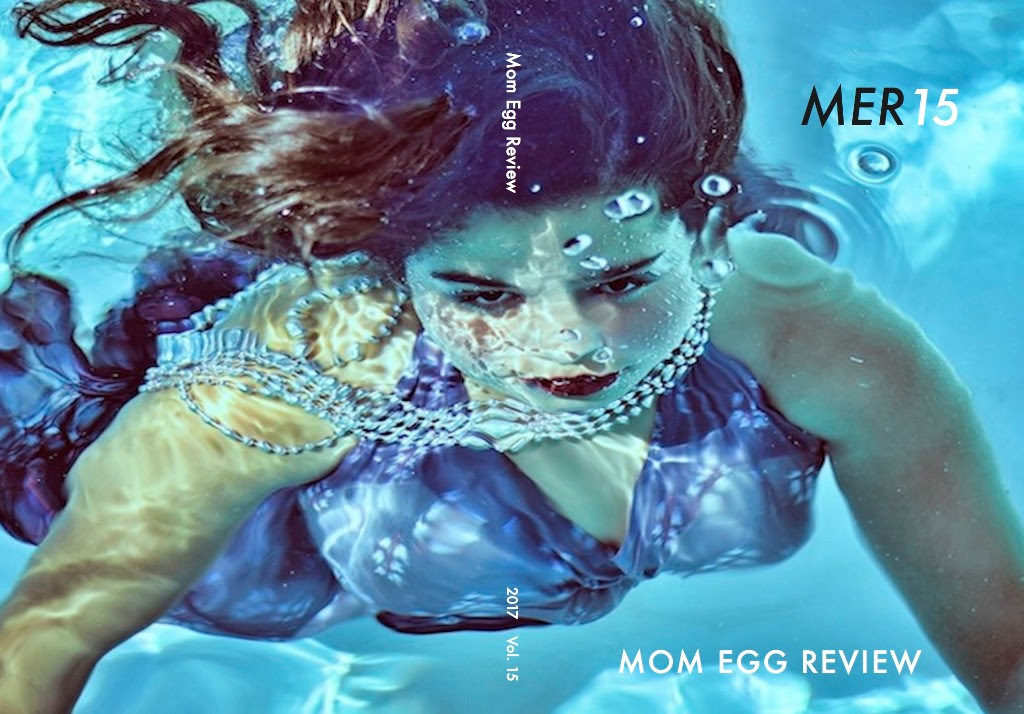
MER LAUNCH AND READING THIS WEEKEND IN NEW YORK

Announcing the launch of MER 15!

The 15th annual print issue of Mom Egg Review launches this Sunday at The Gallery at Le Poisson Rouge.  All are invited to attend.  The lineup of readers and info for the event are below.  It promises to be a truly inspiring reading of diverse literary voices. Advance tickets available till Saturday here:
http://www.themomegg.com/themomegg/2017_Launch_Tickets.html

Categories
Art Books Classes Conferences Featured Feminism Literature MAMA Media

A Magnificent Move ~ Featuring Mother The Job [CLICK]

As I settle in the beautiful city of St. Petersburg, I can’t help but look around in wonder? After living and working in Manhattan (and nearby Hastings On Hudson) for the last 37 years, Florida is a BIG change! I’ve only been here for a few weeks, but two of my children graduated from Eckerd College so I am fairly savvy to the area.

There are a plethora of choices when it comes to picking a lifestyle here. I have met people who live on Beach Drive in the heart of downtown St Petersburg; friends who make their homes within a few hundred yards of the Gulf of Mexico, and some acquaintances who experience the desperation of having no place at all to call home.

I ask myself, what am I doing here? What is my justification for picking this spot? What do I hope to accomplish? While some of my peers are taking a much-needed sabbatical, and many of my colleagues (who are just a few years ahead of me) are thinking about retirement, I have chosen to create a live/work situation across the street from St. Petersburg High School in the Historic Kenwood Arts District of downtown St. Pete. Most recently, Kenwood won first place in the “Physical Revitalization-Single Neighborhood LINK.”  (continue reading below slide show)….

This decision honors a commitment made after years of great personal adversity. Bed-ridden from SLE and renal complications in my late thirties, into my mid-forties, I had a lot of time to think about my life– and life in general. Although I had been amply blessed and was grateful for much of what I received in terms of the health of my children and financial well-being, I began to realize that I had not been living up to my potential. I received a very clear spiritual message. Illness was the universe’s way of making me tune into a much larger mission.

This new thirst for knowledge and longing for empowerment led me towards a feminist sociological investigation into the arts, history, and science of motherhood and mothering. From the ridiculous to the sublime I screamed, sang, and shouted from the stage with my band Housewives On Prozac. Slowly, a vision for mothers in the visual and performing arts crystallized. (You can read more about this at Mutha Magazine. LINK is HERE).

Now, sixteen years later (and twenty-seven years after my first child), I am bringing the latest incarnation of the Museum of Motherhood to 538 28th St. N. St. Petersburg, Florida 33713. The Museum has popped up in Dobbs Ferry, NY (2003-2005), 401 E. 84th St. NYC (2011-2014), and now: here. The aim of this newest space is to forge community connections while highlighting exhibitions about mothers, fathers, and families. I am so very thrilled that Alexia Nye Jackson has agreed to share her fantastic work titled “Mother The Job,” an arts-based, economic exploration of motherhood in the U.S.A.

Also included are the ProCreate Project Archive and assorted fine art by Anna Rose Bain, Helen Knowles, Vee Malnar, Ronni Komarow, Noa Shay, Norman Gardner, and others. The Museum will open its doors to the public beginning September 2016. Hours will be Thursday & Friday 11-6pm and Saturday 1-4, by appointment only for tours, talks, films, and special activities. Visitors may access our extensive collection of books in the Andrea O’Reilly Library. Call 207.504.3001 (877.711.6667).

We will also launch three new initiatives in addition to Mother Studies courses online, the JourMS (Journal of Mother Studies), and the Annual Academic M.O.M. Conference each May in NYC. Those additions include the “I <3 M.O.M. Conference” in February; featuring Arts, Academics, and Inspiration, and “A Night At The Museum” initiative on Air BnB, whereby guests will be able to spend a night at the Museum, and by summer 2017 we will offer non-profit residencies for writers, artists, and scholars in the area of mother studies.

As the Museum’s founder and director, I am modeling my commitment to this current exhibition space after Eleanor Morse (among others). Eleanor helped to co-found the Salvador Dali Museum in St. Petersburg circa 1982 after her (and her husbands’) personal collection of Dali paintings spawned what is now arguably one of the centerpieces of St. Petersburg’s cultural landscape. Let the good work continue. ~ M. Joy Rose (website)

**Read more about my commitment to the Tampa Bay area: Feminism, Football, and Family [Article LINK]

MONTHLY NEWSLETTER

Categories
Birth Books Conferences Featured

New Keynote Announcement for M.O.M. Conference

Announcing our newest morning keynote of the Annual Academic M.O.M. Conference, Kimberly Seals Allers on Saturday, May 7th at 9:30AM.

Kimberly Seals Allers

Kimberly is an award-winning journalist, author and a nationally recognized media commentator, speaker, consultant and advocate for infant health. A former senior editor at ESSENCE and writer at FORTUNE magazine, Kimberly is widely considered a leading voice in the counterculture movement in infant feeding. Last year, her online commentaries on the social, structural and racial complexities of maternal and child health issues received over 10 million page views. Kimberly’s fifth book, The Big Let Down—How Medicine, Big Business and Feminism Undermine Breastfeeding will be published by St. Martin’s Press this summer.

Kimberly is currently the director of The First Food Friendly Community Initiative (3FCI), a W.K. Kellogg Foundation-funded pilot project in Detroit and Philadelphia to create a national accreditation process for breastfeeding-friendly communities while addressing local social stressors and economic strengthening for families. In 2011, Kimberly was named an IATP Food and Community Fellow focused on reframing breastfeeding disparities as a food systems issue, where she pioneered the concept of “first food deserts”—communities that severely lack accessible resources to support mothers who choose to breastfeed. As a communication specialist, she works with non-profits, hospitals and public health organizations to develop impactful messaging strategies for communities of color.

Kimberly has appeared on Good Morning America, CNN, Anderson Cooper, the Tom Joyner Morning Show and in various international and national media outlets. Kimberly is a graduate of New York University and the Columbia University Graduate School of Journalism. A divorced mother of two, she lives in Long Island, NY with her children. Learn more at http://www.KimberlySealsAllers.com.

Follow her on Twitter @iamKSealsAllers

More about the Conference this year [LINK].


Categories
Books Featured

A Gaggle, A Chorus, or a Consternation of Mothers

Thoughts in blog-form by Rosalind Howell

There is a  picture book that’s currently very popular with my three young children, called The Odd Egg by Emily Gravett. In it a duck finds an egg to hatch having apparently failed to lay her own.This is observed closely by a group of various birds (including a parrot, goose and flamingo) who wind around each other, clutching their own ‘normal eggs’ and look on suspiciously as Duck’s out-sized and green-spotted egg appears not to want to hatch.

Eventually Duck’s egg cracks open and a huge baby crocodile emerges with a “snap!”  its already sharp teeth lunge at the watching gaggle of judgemental bird parents before contentedly wandering off behind Duck with a gentle call of ‘mama!’. With each reading all of us gleefully anticipate that ‘snap!’ as the gaggle of bad/bird mothers get their comeuppance.

Also this month I went to see Rachel Cusk‘s updated version of Euripides greek myth, Medea, which played at the Almeida theatre in London. It tells the story of a woman (a mother of two), whose rage, at the betrayal of her husband and the cruel and rejecting society she is abandoned to has terrible, fatal consequences. In this contemporary version Cusk reconfigures the traditional greek chorus as a gaggle of hostile and judging fellow mums. As in the traditional greek chorus these woman dress the same, speak as one and move in and out of each other. They carry identical doll babies and create a kind of multi headed single organism that judges, dismisses, mocks and fears Medea, refusing to identify with her or empathize with her pain.

At times it has been my experience of becoming a mother that anticipation at feeling part of a cozy tribe of motherhood coexisted with a fear of gang culture. The possibility of togetherness, connection and support is at times overshadowed by a fear of difference, intolerance and rejection.  In discussions with other mothers we all recognised the stereotypical image of the impenetrable gang of other mothers at the school gate. All of us identified at points with being ‘Duck’ or ‘Medea’, perceiving ourselves the object of hostility from the group. We were less inclined though to identify with being part of a group ourselves that disavowed difference and kept individual mothers and their different experiences firmly out.

Deborah LevyIn her memoir, Things I Don’t Want to Know, writer Deborah Levy paints a picture of mums at a school gate divided into ‘us’ and ‘them’. The difference being the ‘them’ give their children nicer things to eat, like sweets and chocolate. It portrays vividly the conflicted and confused experience of mothers who can feel envy, fear and suspicion towards other mothers as well as themselves, all at the same time. Ins Freud’s theory of the Narcissism of Minor Differences he postulates that those groups with the most in common often become the most fiercely apposed. Small differences became inflated so connection becomes impossible. According to this theory it is not the differences between us we can’t stand but the sameness, which this fear and dislike of difference only masks.

In Cusks’ Medea it is the chorus of mothers we are supposed to despise. Their identical clothes and mannerisms, their shared views uttered mindlessly, which delighted the audience, become synonymous with a kind of collective stupidity and fear mongering. When groups of mothers are perceived as gang-like by other individual mothers a very real sense of violent aggression can be felt. Yet I was struck by how surprisingly life-like were the doll babies that the chorus held. Something in the way they held, rocked, lay down, even briefly shook their babies was recognisably real. Yet identifying with them felt like the real taboo.The ease with which a negative image of a group of mothers such as the chorus in Medea can be received shows how culturally acceptable it is to hate mothers, even if you are one. In other words, there’s nothing worse than being just another mum.

The collective noun for a group of mothers is a consternation. The word suggests an experience of impending danger, and the meaning, a sudden feeling of anxiety when something unexpected and unpleasant happens. Whilst arguably there are likely to be many moments that the experience of being a mother or mothering makes a woman feel consternation herself, this word as the collective noun, tells us much about how mothers are perceived by individuals and society at large.

The psychotherapist Rozsika Parker has made much of the interaction between a mother’s internal processes and the pressures that exact on her from society. Ubiquitous but conflicting cultural ideals of motherhood contribute to women colluding with each other in a denial of maternal ambivalence. She defines maternal ambivalence as the coexistence of loving and aggressive feelings within the mother towards her child. Parker believes that manageable maternal ambivalence can lead to creative development in both mother and child. But because society finds maternal ambivalence so intolerable an idea, mothers are still under enormous pressure to live up to cultural ideals of motherhood which deny their difficult feelings towards their children and their role. In what Parker calls ‘looking for absolution’ from other mothers, as mothers we can then attribute all those difficult, unbearable feelings to some other individual or group.

It is inevitable then, that the differences and conflicts within us between our ideal mother self and the real life flesh and blood one must somehow be tolerated. Likewise must our differences as mothers. Women, with young children particularly, are compelled to negotiate a complex web of relationships often involving other mothers, that comes from the practical and emotional demands of raising children. As group analyst Farhad Dalal says, groups come together for practical reasons and to do with context, therefore difference, as well as similarity will always be present.

To adapt a phrase by Dalal, groups of mothers in our culture get a bad press, and so does imitation. Strong cultural pressure is exerted on mothers to be independent, unique individuals as well as, paradoxically,  to maintain the accepted cultural collective face of the perfect mother. Our society pits mother against mother in fear and competition. And a fear of difference can hide a something more tricky; our similarities, and our shared humanity. This becomes all the more obscured at a time of heightened widespread political fear of the other.

At the end of the Odd Egg, Duck walks off defiantly, followed by crocodile. They have ‘won’, they have each other. It seems to suggest they can leave behind the unwelcoming, imperfect group to a fantasy of mother-child symbiosis where difference and conflict need not be acknowledged or born. It is a triumph of individualism as well as a fantasy of mother/baby union. Yet as the story ends we can only imagine what might be the very real challenges of a crocodile actually living with a duck.

Dalal, F. Taking the group seriously. (1998) Jessica Kingsley.

Figlio, K .The Dread of Sameness: Social Hatred and Freud’s ‘Narcissism of Minor Differences’

https://www.essex.ac.uk/cps/documents/Dread-of-sameness.pdf

Levy, D. Things I don’t want to know. (2014) Penguin.

Parker, R. Torn in Two: The Experience of Maternal Ambivalence, (2002) Virago

From Mumsnet to Medea – Discussion at Almeida Theatre (Oct 2015)

www.thefreedictionary.com