Categories
Art Featured Feminism International Literature MAMA motherhood Residency

M.A.M.A. Issue 26: Welcomes the NEW YEAR – 2018 with Melissa Thomas and Megan Merchant

Artist: Melissa Thomas

Last month Melissa Thomas had a piece of reflective non-fiction writing published on the Mom Egg Review website in relation to her salt labyrinths work. Her latest projects some are due to be exhibited at the Shelf gallery in Cambridge, England in January 2018.

The Mother and the Lemon.

As the sun glows, radiantly flowing through the bedroom window, my daughter wakes by the dawns glimmer to ask if I remembered to buy lemons to make lemonade. In the bright morning light, before the displacement of home life, the kitchen is silently prepared with equipment set in place where two bags of lemons rest in the fruit bowl. Lined up on a chopping board like a diagram of the solar system, each lemon is a surface of its own. Displaying an intimate citrus topography, woven together in similarity through the common characteristics of colour, texture and markings, yet, subtly unique in appearance. Reminiscent of a fingerprint, each inimitable indentation is as distinctive as the dots of pores upon skin. Sliced around the plump centre each half is squeezed, extracting its juice for the recipe. Once the liquid is retrieved, I scoop out the remaining flesh, separating it from the dimpled, delicate rind. The scent arising from the anatomised lemons is sharp and sour, permeating the air and nostrils. Cleansing the debris of domestic duty, they become miniature vessels of material gift, bearing ripe nourishment for the senses.

Through the process, the fruit of the lemon is altered into a pile of translucent skin and fragments of flesh. Examining the squashed segments, soft and pulpy in their consistency, the texture induces memories of a placenta. A life sustaining organ, transferring nourishment from one source to another, the placenta is the forgotten phase of birth. Once a baby has arrived, we do not tell stories of the afterbirth, it remains an invisible entity, labelled as medical waste. Alternate meanings and values attached to the symbiotic unit of a baby and its placenta deviate from the codes of accepted social boundaries, rigidly defining normality. The placenta belonging to my youngest child was shaped like a heart, coloured in rich and vivid shades of crimson, sheathed under the loose and wrinkled pinks of membrane, mapped by sprawling thick blue hues of veins. Rooted at the centre, the thick, white umbilical cord, a twisting helix extending like a bridge between mother and child relays communication unheard.

The touch of my skin against the lemon remnants evoked the residue of the experience of birth. The lemons possess a gestational quality that render the juice amniotic, the pips translate as foetal. Attached to the interior, gentle compression enacts effacement as the seeds emerge in continuum. The dried pips are arranged in three lines, neatly spaced one after the other. They become pauses in the dissection of the fruit, punctuation marks to the story, commas dividing a sentence, separating items on a list; peel, pith, flesh, juice. A composition of the inbetween, they highlight negative space, drawing our attention to the blank. How does something emerge from nothing? Categorisation offers a framework to deduce quantitative meaning. Individual components become labelled and isolated from the whole. Mother, daughter, womb, placenta. Where does one begin and the other end? The linear route of experience ruptured the moment she crowned, transpiring from my body, taking with her the comfort of what is known as I exploded into a new realm, reverberating as the hot nebula of a celestial sphere. Reintegration within the symbolic apparatus of language required my children to become gramma within my story, interspersing the concrete with the fluid, subverting boundaries.

Each persistently fruitful contraction acts as a messenger, despatching significance between the body and mind in a language we must decipher. Fluently breathing through each tightening of her muscular uterus she dressed slowly, preparing to relocate to hospital. Shifting through this passage of momentous transfiguration together, we strode down the wide, white corridors side by side, each step asserting strength and fortitude. The labour room is small and square, decorated with attempts to neutralise the clinical atmosphere; colourful painted pictures filtering the bright daylight through the window, fairy lights strung across the wall in celebration. Rather than blending a sense of unity, the differences seem to contrast. Two ideological philosophies jarring against one another, a nexus located in the physicality of birth, unravelling around the mythic quality of experience. A sonogram affirms the elusive positioning of the baby wriggling in her womb; transverse. Validation becomes immediately distinguished, she had known all along. The emotional apprehension dissipates as the course ahead becomes clear and consent for a caesarean is acknowledged.

The operating room is bright and busy. Her naked skin sits at the centre of bustling bodies veiled in sterile overcoats, manoeuvring between the concentrated landscape of wires and machinery. I observe the surgeon’s fingers tracing the ridges of her spine as the positioning for the needle is located and anaesthetic administered. Sitting by her side, caressing her soft arm, the process is quick and smooth. A green screen draped between her torso and the surgeons work creates the illusion of two halves. A mind and a body divided at the centre, I witness her wholeness through moments of disarticulation. She is the centre of the universe as tears roll down her cheeks like rain falling from the clouds, nourishing the fertile soil, eternally giving and receiving. The baby nestled sideways within her womb, emerges purple and quiet, safely tucked inside her gown, skin to skin. The surgeon begins the process of suturing her abdomen, each layer of flesh dexterously adjusted under the bright overhead spotlight. With nimble hands, a threaded curved needle draws the deep incision together into a rippled seam tracing the contour of her swollen uterus, a threshold on the edge of the fabric of creation.

I returned home in deep exhaustion, my body heavy in a haze. Romantic and visionary ideals of expectation are torn away by the wild, bold autonomy of parturition. There is no personal, there is no political as division dissolves, blurring dreams and nightmares. I awake. Upon the floor, next to my bed there is a single lemon. I stretch my legs to begin the day and I stand upon its oval shape. Beneath the weight of my body, the fruit splits across its ellipsoidal meridian squirting citrus juice onto the soft, beige carpet. I pick up the injured lemon, its form encased within the palm of my hand, bearing resemblance to a tiny body, perhaps of a bird or a small mammal. With flesh and liquid contained beneath its surface, it appears to be breathing. Squeezing the supple, waxy peel between the gentle pressure of my fingertips, the pulp contracts and expands, it’s alive. Transformed into a subject, not solely an object, becoming more than an ingredient for culinary, domestic or medicinal purposes but emerging from its own stories and history.


June 2017 Melissa Thomas

Poetry by Megan Merchant

Working the Night Shift


String a white sheet

from the body of trees

in the wild,


set a lantern

behind its screen

and wait


for the flush of

mottled wings

to lisp and net

the light,


note how some

are frayed as

edges of a rug

beaten against

wind,


how the brightest

markings allow

the most brazen

behavior,


a wingspan—that if

crumpled

inside a mouth—

will tart a tongue.


Wait as they collect

like silk eyes

twitching,


paper darts

that shred rain,


and can trace the scent

of a wounded leaf

to know where

to slip their young

safely.


Wait long enough

and they will show

you how to be reborn

into night.

From Mom Egg Review Vol. 15 2017

Megan Merchant lives in the tall pines of Prescott, Arizona where she spends her days exploring, drinking too much coffee and avoiding the laundry.

Her poems and translations have appeared in publications including The Atlanta ReviewKennesaw ReviewMargieInternational Poetry Review, Diode  and more.  She holds a MFA degree from UNLV and was the winner of the 2017 Beullah Rose Poetry Prize, the 2016-2017 Cog Literary Award and the Las Vegas Poets Prize, She is a multi-year Pushcart Prize nominee.

She is an editor at the Comstock Review, and the author of four chapbooks: Translucent, sealed, (Dancing Girl Press, 2015),Unspeakable Light (Throwback Books, 2016), In the Rooms of a Tiny House (ELJ Publications, 2016), and A Thousand Paper Cranes(Finishing Line Press, 2016).  Her first full-length collection, Gravel Ghosts, is currently available through Glass Lyre Press and was awarded the 2016 Best Book Award.  Her second full-length poetry collection, The Dark’s Humming, won the 2015 Lyrebird Award and is also available with Glass Lyre Press.

Her first children’s book, These Words I Shaped for You, is now available with Penguin Random House

http://meganmerchant.wixsite.com/poet/about

MAMA_Logo_2015

The Museum of Motherhood, the ProCreate Project, the Mom Egg Review, and the Mother Magazine are pleased to announce the launch of a bi-monthly international exchange of ideas and art. M.A.M.A. will celebrate the notion of being “pregnant with ideas” in new ways. This scholarly discourse intersects with the artistic to explore the wonder and the challenges of motherhood. Using words and art to connect new pathways between the creative, the academic, the para-academic, the digital, and the real, as well as the everyday: wherever you live, work, and play, the Art of Motherhood is made manifest. Download the Press Release here or read about updated initiatives#JoinMAMA  @ProcreateProj  @MOMmuseum @TheMomEgg

Categories
Art Featured Literature MAMA motherhood

MAMA by Elisabeth Schön Words by Judy Swann [CLICK]

The ProCreate Project, the Museum of Motherhood and the Mom Egg Review are pleased to announce the 24th edition of this scholarly discourse intersects with the artistic to explore the wonder and the challenges of motherhood. Using words and art to connect new pathways between the academic, the para-academic, the digital, and the real, as well as the everyday: wherever you live, work, and play, the Art of Motherhood is made manifest. #JoinMAMA

Art by Elisabeth Schön – See more at ProCreate Website:

ZMOTHERINE

Art by Elisabeth Schön

The postpartum period is a surreal time and space that can hurt or heal a woman but either way she’ll never forget it with her in body in flux and a human being that just came through her and is utterly dependent on her for survival. Their meeting binds them as she’s confronted with her biology and its vulnerability. 

 
Elisabeth Schön is an artist photographer photo book maker juggling her attempts at self-publishing with three young boys at home.

Words by Judy Swann

Fool

I threw rose petals on the ground
and her pink slippers slid on that silky surface, the Muse, when she came just now.

Her small hooves have worn every fabric, every skin, every color, my kids
try them on when she slips them off.

Her little goat horns wobbled and she scolded, “Why am I not connecting? Why so many dreams and so little in my basket, Fool?”

By ‘Fool’ she meant ‘Innocent Child.’ She said, and I could see her beard, she said, “Tell me that you love me.”

“I am,” I said, “not sleeping alone.”
She said, “Tell me that you love me.”
I said she was always on my mind, I called

As often as I could. She said, “Tell me
that you love me.” I said “I’ve spent twenty years, two husbands, and all my thrift on those roses.”

Judy Swann is a poet, essayist, translator, mom, blogger, and bicycle commuter, whose work has been published in many venues both in print and online, including the Mom Egg Review. Her son is (always) on his way home. Her book, We Are All Well: The Letters of Nora Hall has given her great joy. She loves. She lives in Ithaca, NY.

Categories
Art Literature MAMA

Submit to The Mother Load – Essays About Art and Motherhood: Extended deadline Oct. 15 [CLICK]

Women will never stop discussing the complexities around being a mother and what motherhood (in its many forms) means for their professional life. Within the arts, there are a wide range of disciplines, each with their own subjective ways of determining an artist’s level of success. As individual artists, how do we define success within our practice, our community, and the greater art world? And, at the same time, how are we defining success as mothers?

As The Mother Load project enters its fifth year, we are creating a new way to engage in this dialogue through an anthology–a collection of essays by mother-artists. In collaboration with writer & editor Maggie Messitt, we will work to produce a collection that incorporates your stories and give personal narrative to the broader conversation about motherhood, artistic practice, and success.

We are currently seeking potential contributors to this project and are collecting applications until September 15, 2017. As you answer the following questions, please consider what parts of your story you are most passionate about sharing. What aspect of your life as a mother-artists do you think about with the most emotional and intellectual energy? Was there a single incident that taught you something important and from which others could really benefit?  As this anthology focuses on sharing individual definitions of success, what are yours?

Your responses to the following questions will not only provide us with a writing sample, but it will assist our editorial team in determining the direction, if selected, you may (or can) take your essay. Selected contributors will work closely with our team throughout the writing and editing process (story inception, first draft, multiple edits, and a final essay for publication). SUBMIT: http://www.themotherload.org/

ALSO SEE PROCREATE PROJECT LEFTOVERS SUBMITTAL DEADLINE SEPT. 15: [LINK]

Categories
Art Books Conferences Feminism International Literature Media motherhood Residency Spiritual Motherhood

About the Artist & Founder

Martha Joy Rose (call me 'Joy') is a scholar, artist, curator, and activist. She She founded MaMaPaLooZa, after touring with her band Housewives On Prozac (1997-2008). She is the founding director of the Museum of Motherhood.

Martha Joy Rose (call me ‘Joy’) is a scholar, artist, curator, and activist. She She founded MaMaPaLooZa, after touring with her band Housewives On Prozac (1997-2008) and began work on the Museum of Motherhood (MOM) in 2003. She holds an advanced degree in mother studies from CUNY, GC, is the NOW-NYC Susan B. Anthony awardee (2009), has lectured extensively, written widely, and served as publisher for numerous mom-made publications. Joy has also been featured in the Tampa Bay Times locally as well as WEDU, PBS, ABC News and nationally on Good Morning America, CNN, and NPR. She is the NOW-NYC recipient of the Susan B. Anthony Award, her Mamapalooza Festival Series has been recognized as “Best in Girl-Power Events”, and her music has appeared on the BIlboard Top 100 Dance Charts. Her current live/work space in Kenwood is devoted to the exploration of mother-labor as performance art. She is an ‘artist recipient’ of a grant from St Pete Arts Alliance & in 2023, she was certified with the Adult Mental Health First Aid, USA. She is the mother of four adult children and five grandchildren.

Diary of a Curator

9:30 AM. I am a cheerleader with a cup of coffee in hand, at my desk, dressed in underwear, checking e-mail. The young intern in Southeast Asia, who is conducting research as part of a special project for the Museum of Motherhood is having an issue getting access to the women who have been traumatized by rape, displacement, and other human rights violations in Myanmar. She wants me to look over her proposal. A senior in in high school, she believes in humanitarian activism. It is only 9:30 am and we are mothering the world.

12 PM Pause for olives, crackers, kombucha, and seltzer. Nice ice spills on the floor as my phone rings. Daughter wants to video chat from San Francisco on her commute to nursing school, then back to my computer. 3-hour time difference.

1 PM Sift through the student e-mails which begin with “Dear Professor Rose, I am so sorry I forgot to turn in my homework on time,” and are followed by a variety of excuses, most of which are not worth sharing.

2 PM Urgent phone call from a friend. Her voice quivers. “Can you talk?” She apologizes profusely. A secret story spills out. She keeps asking, “Am I crazy?” She’s in the car, with her daughter, leaving her husband. She says she is not safe and needs advice and a divorce attorney. I refer her to one and also the Pace Women’s Justice Center.

2:30 PM Text to my friend. “You are strong.”

3:00 PM Talk to my sister. Grab a cookie.

3:30PM Fingers on keys. I have a theory. I am a woman of many collected years, who has raised four children to adulthood. My circle is comprised of mothers, many who suffer periodically from anxiety, depression, and even mania. (I have had my episodes too). We are the women, forty to sixty years old who have spent our adult life feeding babies, changing diapers, and fretting over young progeny. We work, we take public transport, and if we have cars we drive. We try to sleep. We keep a grueling pace: the caregivers, the mothers, maybe now the fathers, but mostly the mothers whose bodies feel the vacant place where their infants stirred: the real, the imagined, and the yearned for. Trying to heal that deep mysterious hole, prepping children for school, cooking meals, cast, cast, casting spells. We, snap pictures for the prom, or we take them to the hospital, or maybe the worse possible thing happens. We keep so busy. Then, when our youth go off in the world to make lives of their own, all that is left in place of twenty years of directed, exhausting, unrelenting energy is a longing. That momentum, circles back into the heart and mind, funneling a giant vortex that drives some mad – Vigilance! Do not let the madness take hold. Take a deep breath. I am flinging these words, towards the universe in the hopes of reaching your collective soul. Take heed, I beg you. Find a way to fill yourself.

4 PM I draw a sketch of a small statue. She is a victorious woman made of steel with a V-up and V-down. Tomorrow, I go to town to procure rebar, followed with a lesson in welding, from a young man who works in a car factory, who has gifted me with a stick welding machine from 1957. “Can you give me lessons,” I ask? “Sure,” he replies. I place the drawing on the desk and stare at it. The fire burns hot.

5 PM Stirring a pot. Cooking the dinner. Watching the soup spin. I anchor my artistic practice to scholar Sarah Black’s assertions that argue for the position of “mother as curator.” Everyday activities equal the sum of our labor on behalf of the flock, as well as our art, and collectively we create, enact, and display our creativity.

6 PM I still have mountains of homework to do. I have a book to finish, paintings to paint, and metal to bend. I have a museum to run, my mother’s farm to harvest, a home in New York where the work began. Where the children were raised. Where I made music, was married, and then divorced.

7 PM Chores, water garden, pick up the kitchen. Then, back to the computer.

9 PM More papers. More emails. My eyes are tired. I need to log off until tomorrow.

9:30 PM Shutting down the screen. Brushing my teeth. I am grateful for the women, for IWD, for Women’s History Month, for all the ancestors who made my life possible, and for my mother, grandmothers, aunts, and sisters who inspired me to find this work. To the professors, scholars, and artists who helped me understand the world, I live in.

10 PM One last thought, as I lie in bed, in the dark, when the quiet is so thick it feels like an eternity. In the house where my parents lived and died, in the bedroom that was theirs for twenty years after they moved here, next to a field where relatives from Scotland arrived in 1832, where the blackness swallows the light, I say my prayers. I call out for help, invoking my angels, lighting a candle, blessing my children wherever they are (because I cannot tuck them in anymore), and then I wait, slumbering, for strength to find me again, which invariably it does.

Martha Joy Rose; IWD Women in Herstory 2023 (Shared from a 2019 post)

10 AM Log onto the Manhattan College online. Grade papers for the Sociology of Family class. I am teaching fifteen students this summer. They are all boys. I am teaching them Mother Studies. We recite the names of the Female Founders one by one committing them to memory, first the feminist leaders, then their theories, then, the scholars, eventually the artists. I cite the quote from Adrienne Rich: “The one unifying, incontrovertible experience shared by all women and men is that months-long period we spent unfolding inside a woman’s body. Yet, we know more about the air we breathe, the seas we travel, then the nature and meaning of motherhood.” (Of Woman Born, p 11)

Categories
Art Featured Feminism Literature Residency

MOM Residency Testimonial with Dawn Parker [Click]

Dawn Parker has been living and working at the Museum of Motherhood Art Annex in St. Petersburg, Florida as part of the Spirited Woman Residency Program since June, 2017. The goal of her residency is to complete an edited, book-ready version of a writing project she’s been laboring on for several years now. Since beginning her stay with MOM, Dawn has enrolled in classes to become a certified Life Coach. Joining her for two weeks in July, was New Yorker, Christen Clifford who came the the MOM Residency to work on her manuscript about sexual violence, feminism, and radical transformation. Christen’s visit saw her returning to Florida for a second time this year. Hanna Brockbank looks forward to spending two weeks as part of the residency in October. Hannah hails from England, is a poet, and is earning her PhD while working towards a completed collection of poetry about motherhood. If you are interested in learning more about the MOM Residency Program or you know someone who would benefit from focused time away, working in a supportive environment, and whose concentration is on the maternal, please find out more here. [LINK].

2017 Residencies:
January – Christen Clifford
Summer – Dawn Parker
July – Christen Clifford
October – Hanna Brockbank

MOM Residency Progress Report with Dawn Parker

Four and one half years ago, I started writing. I’ve been writing my story; a heartbreak as catalyst for a breakdown; the realization of the breakdown and heartache being symptoms of a larger history of issues; followed by a plan to learn how to love myself as a way to heal my life. Although it’s been an amazing journey of revelation and unexpected manifestation, I can’t really say I could give you definitive methodology that would help you learn how to love yourself. I have no formula or magic bullet. I do not have an article I’ve penned called, “The Top 10 Ways to Learn How Love Yourself”, that would give you any answers. 

From my experiential expertise, self love, it’s actualization and the resulting personal manifestations, are as uniquely individual as a fingerprint. No one person has an architectural design that can build an internal structure to house generic self love that has the ability to stand strong in every individual. Our emotional bodies are put together with different parts, influenced with different histories, and spoken in different languages. Self love is our intimate relationship with ourselves. No one way will work for everyone. Our differences deserve honor and respect.

What I can tell you, is my story.

Late last year, I’d gained sufficient trust in my intuition to make a much needed geographic life change. With barely an outline of a plan, I made a decision to move away from the town I’d called home for 20 years. I was going “back home” to roots, to family. I was nervous and a little scared, but I leaned in and made a leap of faith. Self love replaced insecurity and doubt with the confidence necessary for me to trust the intuition in my gut to override the fear.

Once I took action, that one leap of actionable faith, everything in my life flowed seamlessly into place in ways that I hadn’t even imagined. My bare bones outline of a plan fell apart, so that, as the cliche says, “Things could fall together in a better way”. Self love was providing me the courage to be brave enough to live an expression of unprecedented personal freedom. It was the manifestation of a long held desire. It was the feeling of a dream come true.

Four months from my arrival back home, I was still unsure of what I was doing or where I was going. Nothing had happened as I’d thought but I was still siding with faith and I kept leaping. On one fortuitous night an Airbnb listing titled, “Spend a Night at the Museum” caught my eye. It was in a cottage at The Museum of Motherhood. I was intrigued.

My first meeting with Martha Joy Rose aka Joy, proved an instant connection. She’s… well, I don’t have sufficient space on this page to give who she is the description she deserves. Fast forward five months and I am the current Writer in Residence/House Mother of the Museum of Motherhood. Self Love healed my pain, sorrow and self loathing into a place of non existence so that I could shine a bright light, from my inside out; a light bright enough for others to see. Joy saw that light. She took a chance. She gave me an opportunity that has changed my life.

Now, armed with love, light, courage, confidence and complete humility it’s time for another leap. I understand now, that when we feel better, when we “love” ourselves and feel good in our skin; when we have the strength to feel good all the way into the marrow of our bones, it’s time to give back. It’s time to serve. I know with the deepest of reverence that it is our charge to help our fellow humans. I believe beyond contestation that it is our obligation to do no harm. It is our imperative to educate and do good works. There’s more, but for now, this is what “Self Love” feels like to me. True story. www.dawnlouiseparker.com

Categories
Books Literature

MER LAUNCH AND READING THIS WEEKEND IN NEW YORK

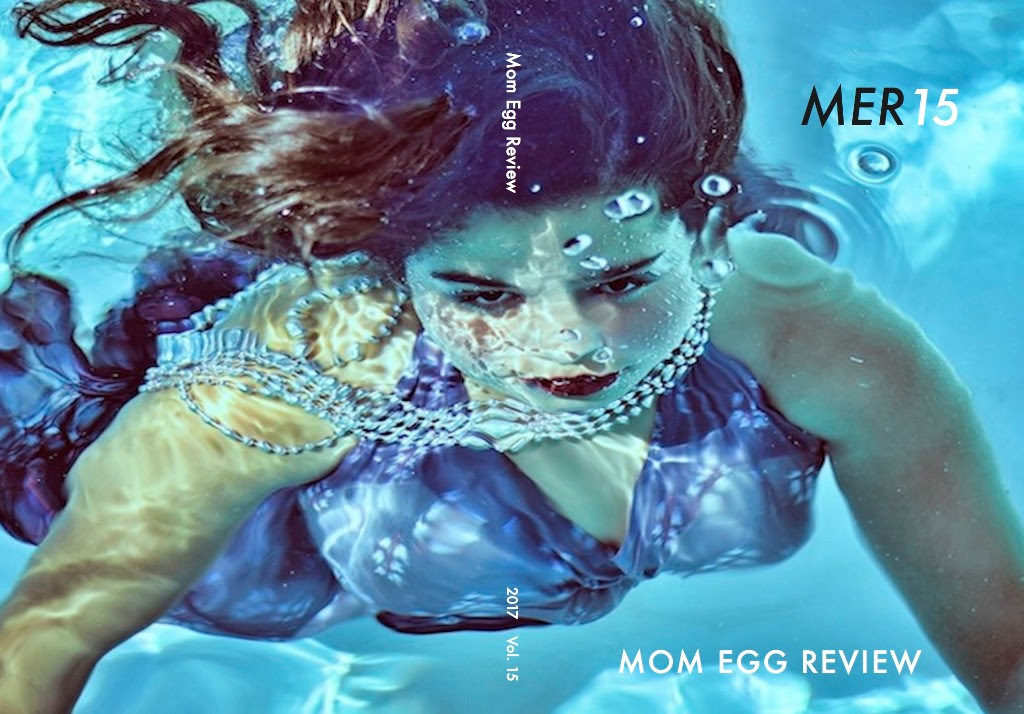
Announcing the launch of MER 15!

The 15th annual print issue of Mom Egg Review launches this Sunday at The Gallery at Le Poisson Rouge.  All are invited to attend.  The lineup of readers and info for the event are below.  It promises to be a truly inspiring reading of diverse literary voices. Advance tickets available till Saturday here:
http://www.themomegg.com/themomegg/2017_Launch_Tickets.html

Categories
Art Literature MAMA motherhood Residency

MAMA – Privatizing Motherhood and the Pussy Bow

Featured Artist is Christen Clifford and her Pussy Bow (from imprints of her actual pussy on silk) – See more at ProCreate for images [LINK}.

Christen Clifford is a writer, feminist performance artist, curator, professor, actor, and mother who lives in Queens.

Christen Clifford, Pussy Bow at the Museum of Motherhood Art Annex Residency in St Petersburg

Privatizing Motherhood
By Karen Malpede

My daughter, born the year Ronald Reagan was elected president in a landslide, has given birth to her first child in the year Donald Trump squeaked into the presidency. She was raised on the outskirts of what was then un-gentrified Park Slope and she lived in a theater, the loft-space held our living rooms and our stage. She was raised collectively—at the Park Slope Food Coop and the Park Slope Child Care Collective, where she and I met friends we have to this day. I mothered her collectively as well. She came with me everywhere: meetings, rehearsals, my monthly food coop work slot and I worked one day a week in her child care. She came with me to women’s conferences on war and peace, and ecofeminism. She camped with me at the Women’s Peace Encampment. I have a photo of her, at four years old, dressed in a striped red and white bathing suit, weaving yarn across the exit to the military base, to keep the nuclear missiles inside. They were supposed to be sent to allied nations in Europe, where they would be driven around on trucks for quick launch into the Soviet Union.

We were successful, by the way, not just “we” of course, but the anti-nuclear movement kick-started by women on the antiwar left in England, at Greenham Common, in Germany and in the US. I was arrested as one of the White House Lawn Eleven in 1979, the year before my child was born. I was arrested, again, at a Wall St. anti-militarism demonstration when I was six months pregnant. These protests gained enough popular resonance and force to result in the nonproliferation treaty between Reagan and Gorbechov (which might well be over-turned by Trump and Putin).

My daughter knew my friends, who were artists, activists and mothers: Grace Paley, Barbara Deming, Dorothy Dinnerstein, Judith Malina, Sybille Claiborne, Eve Merriam, and the only two still alive, ecofeminist organizer and writer, Ynestra King, whose birth I assisted and whose son my daughter met the day after he was born, and Martha Bragin, an international child-of-war trauma specialist with a program for Afghan social workers in Kabul, whose child was in the same collective day care. My daughter was breast fed on demand until she was four years old because she was mainly always with me and because it was always all right, or it felt all right to me, to breast feed where ever I was when she was hungry or needed comfort (although I lost a theater grant for breast feeding at a meeting with a local Brooklyn utility). Only once did I pump milk for her to leave in reserve so her father could do the feed—when I went to the second Women’s Pentagon Action, in 1982; and, then, too, to relieve myself, I expressed my breast milk into one of the public toilets in the shopping mall underneath the Pentagon, which felt like a ritual-offering of sorts. I finished a play the day before I went into labor. I remember sitting on the floor bending over my huge belly collating pages. That night I went to the Women’s Salon which I had co-founded, a monthly forum that hosted major writers the minute their books or plays came out. The play I finished before labor was produced in Brooklyn at the Arts at St. Ann’s, then still in the downtown church, when my child was one year old. The first time I took her in my arms into the church for a rehearsal, she, excited but too young to speak, pointed at the domed cathedral ceiling alive with light flooding through the stained glass. “Mama, see!” The words burst out in awe. It would be months before she actually began to talk, but during rehearsal breaks she would crawl onto center stage, sit and mime the gestures of the actors.

Does all this sound antiquated and odd? Or does it sound like a golden age long gone?

Nothing could be less like the motherhoods of my daughter, or of Martha’s daughter, a housing lawyer, or the daughter of another friend, a public health specialist at a state health and human services department. These mothers spend hours of their day pumping breast milk for storage in refrigerators and freezers to be given to their children when they are away at work. My daughter pumps in an employee bathroom at Trader Joe’s, where she works, in San Antonio, Texas, where she and her husband moved because on working class salaries they could afford to buy a house. Martha’s daughter refers to herself as a small-time dairy factory, pumping milk for her son born prematurely who has yet to be fed except through a pipette. At the health and human services agency, nursing mothers must make a reservation to use the lactation room because it is too small for more than one breast-feeding woman at a time. It never occurred to anyone in   “human services” that women might pump and talk together, about work or children or whatever, or, perhaps, it did occur to someone and this is why the room is only large enough for one. Another friend with a young child works on the UN Food Program and is based in Egypt. She has to pump in the prayer room reserved for her Muslim co-workers; there is no other space even for those whose job is figuring out how to feed women and children across the African continent.

These first-time mothers have all been told, they’ve told themselves, they must breast-feed their children for the first two years. My daughter comes from her late shift at 12:30 am and pumps for an hour so there will be milk for her next shift the next day. Then she nurses the baby when he wakes in the middle of the night. Before she leaves for work, she pumps again, after nursing and feeding her baby his home-cooked organic, mashed fruits and vegetables. And she does without another woman’s voice, another woman’s helping hand. She’s alone in her suburban house.

At the same time as the fetus has become “a person”; motherhood has been privatized. What once was, in my memory, collective and communal, joyful—with children passed from day-care to play-date to sleep-over among families who knew each other well, or taken with their mothers to work and on adventures where there were other adoring adults—has become a solitary endurance contest. The mother must not falter; she cannot not produce the milk. She cannot not go to work. She is busy virtually 24 hours a day; she rarely sleeps and is always tired.

Breast-feeding in public is forbidden. Pumping rooms are lonely, inhospitable places. And the burden of feeding her child an optimum diet—of breast milk—is solely hers.

Pumping machines are plastic cups held by hand to the breast, with cords running to a receptacle and they have a wheezing motor. Some pumps are more effective than others, of course, but the machines that come with most insurance plans are ineffectual and slow; it takes a long time to pump six ounces of milk.

Women are isolated, relegated to private, sometimes unsanitary spaces, while they pump. Pumping is considered break-time from work. I had never considered any of this until I visited my daughter in San Antonio and watched her days and nights. When her husband comes home from work, she goes to work. They have an hour or two at most of waking time together. The child is passed between them. He’s still young, at 9 months, but there are no playgroups and scant outings with other mothers. Most of her friends leave their children with their grandmothers while they work (thus, social security subsidizes childcare), but I live and work in New York.

The privatization of motherhood is, of course, the conservative goal. Our lives should be privatized. We should all be in it for ourselves. Wealthy women can hire nannies, but this is just the privileged form of privatization. Mothers on a treadmill from work to nurture to the breast pump have no time to get together, much less to organize.

The point of anthropologist Sarah Blaffer Hrdy’s important book Mother and Others is that children reared and fed by groups of responsive adults (as all children in “primitive” hunting and gathering societies were and are or “they were unlikely to survive”) “learned to perceive their world as ‘giving place.’” This matters greatly, Hrdy says because “Within the first two years of life, infants fortunate enough to be reared in responsive caretaking relationships develop innate potentials for empathy, mind reading and collaboration, and often do so, with astonishing speed.”

Collective childrearing is not just good for mothers, alleviating some of the astonishing boredom of being with an infant or young child; it is essential for children if we wish, that is, to raise empathic adults, capable of understanding and caring for others as well as themselves. Those who see the world as a “giving place” are much less likely to destroy it and themselves with it. They are much more likely to take care.

Hrdy points out those evolutionary traits that are not used can atrophy and disappear. So, she posits, might be the case with empathy. That which once made us human because we recognized the other in ourselves and responded to the stresses and challenges of society as an I and Thou exchange in which our own best interests are best served by serving the best interests of others (for instance, stopping climate change and nuclear proliferation) is in danger of atrophying for lack of use. By privatizing the social activity that demands and creates empathy, we run the risk of raising human creatures wanting this essential trait. A sort of monstrous version of ourselves, loose and amuck in a universe ever-more endangered by our own actions, a world threatened by our inability to understand our own connections.

My daughter’s childhood was spent around the collective, women-dominated antinuclear and peace movements of the 1980ies; it is bitterly ironic that her child has been born into a moment when Donald Trump and Vladimir Putin have decided to play “nuclear chicken” with our planet and to drill for its remaining oil. Nothing would be important, now, again, than women’s voices, raised with all the authority of motherhood, to demand an end to nuclear weapons and real public policy actions to retard climate change. At this same moment, motherhood has become such a private, taxing, full-time job that woman lack the energy and strength, and the hours in the day, to secure a future for their children. This is the cost of privatizing our most communal trust: the raising of children to care.

If my, now elder generation, managed, we also failed to leave a legacy that made it possible for our daughters and their daughters to live collectively as we had. All I can say in defense is that my daughter proves my point; she is one of the most empathic people I ever met; kind and compassionate to her core, struggling and aware. But she is alone with her child. Without collective action focused on planetary peace and renewal her child’s future is grim.

Karen Malpede is a playwright and writer, co-founder of Theater Three Collaborative, editor of Acts of War: Iraq & Afghanistan in Seven Plays and Women in Theatre: Compassion & Hope. Plays in Time, a collection of four of her plays, is forthcoming in 2017. Her work appears in The Kenyon Review, Torture Magazine and The Brooklyn Reader, and has been published in The New York Times, The Drama Review, TriQuarterly, Confrontations and elsewhere. She is an adjunct associate professor of theater and environmental justice at John Jay College, City University of New York.

M.A.M.A. is the Museum of Motherhood, the ProCreate Project, the Mom Egg Review, as an International exchange of ideas and art. M.A.M.A. will celebrate the notion of being “pregnant with ideas” in new ways. This scholarly discourse intersects with the artistic to explore the wonder and the challenges of motherhood. Using words and art to connect new pathways between the creative, the academic, the para-academic, the digital, and the real, as well as the everyday: wherever you live, work, and play, the Art of Motherhood is made manifest. Download the Press Release here or read about updated initiatives.

#JoinMAMA  @ProcreateProj  @MOMmuseum @TheMomEgg
mama_logo_2015-copy

Categories
Art Birth Blog International Literature MAMA Media motherhood

New Exhibits Are Up In St. Pete. Space Opens By Appointment Only Thurs., Fri., Sat., January 1, 2017

Welcome All –

The M.O.M. Museum Art Annex is poised to open its doors on January 1, 2017. The new hours are by appointment only. You must call ahead or e-mail: PH: 207.504.3001/MOMmuseum@gmail.com. Visitors may also opt to “Spend A Night At The Museum,” Thurs-Sat. More info coming on Air B & B.

Our new Live/Work space is pioneered by M. Joy Rose. Over the last year or two, an explosion in mother-making-art has taken place across England and America. Most recently, The Mother House (a summer experiment by Dyana Gravina and the Procreate Project, Nicola Smith and We Are Resident, as well as others, have inspired and connected art, motherhood, and the greater cultural community.

In 2016 a presentation by Sarah Black called “Mother As Curator” at the Annual Academic M.O.M. Conference described her home environment as a video, art, installation, and inter-generational family experience. Her treatise declared that as an artist, she “blurs the boundaries of art, and the personal, family and audience, narrative and auto-biographic practices.” She states that as a “performance maker, she explores the home as both a physical and a metaphysical structure to house the work.” In this way, spaces are informed and co-created by those who participate in its interiors, but similarly, its interiors also hold a template for studying the things it contains from a distance.

As part of The Arts Enclave of Historic Kenwood, in the city of St. Petersburg, this new location aspires to be several things: an ongoing place to study motherhood, fatherhood, and family; an arts annex, preserving and interpreting objects for public consumption; a place of learning; a place to gather; and mostly, a template for all the possibilities to come, as M.O.M. continues to grow and thrive. (read more below slide show)

The current exhibit features: Mother The Job, Moms of Rock, African Body Mask, Helen Hiebert, Pro Create Project Archive, Norman Gardner, Capucine Bourcart, Noa Shay, Ella Dreyfus, Helen Knowles, Anna Rose, Vee Malnar, Flavia Testa, Isabel Czerwenka-Wenkstetten, Christen Clifford, our library, including the Andrea O’Reilly Reading Room with the complete Demeter Press works, DVD Collection, CDs and more. Visitors may also enjoy trying on the Pregnancy Simulator Vest or exploring our “Science of Reproduction” exhibit. In addition, I will be using this space to continue to explore mother-labor as performance-art and to teach small groups of students. Here is my very brief bio. I look forward to meeting you soon.

M. Joy Rose holds a BFA in Theater and a Master of Liberal Studies in Women’s and Gender Studies with a focus on Mother Studies. She is a musician, concert promoter, museum founder, and fine artist. Her work has been published across blogs and academic journals, and she has performed with her band Housewives On Prozac on Good Morning America, CNN, and the Oakland Art & Soul Festival to name a few. She is the NOW-NYC recipient of the Susan B. Anthony Award, her Mamapalooza Festival Series has been recognized as “Best in Girl-Power Events” in New York, and her music has appeared on the Billboard Top 100 Dance Charts.

Categories
Art Books Classes Conferences Featured Feminism Literature MAMA Media

A Magnificent Move ~ Featuring Mother The Job [CLICK]

As I settle in the beautiful city of St. Petersburg, I can’t help but look around in wonder? After living and working in Manhattan (and nearby Hastings On Hudson) for the last 37 years, Florida is a BIG change! I’ve only been here for a few weeks, but two of my children graduated from Eckerd College so I am fairly savvy to the area.

There are a plethora of choices when it comes to picking a lifestyle here. I have met people who live on Beach Drive in the heart of downtown St Petersburg; friends who make their homes within a few hundred yards of the Gulf of Mexico, and some acquaintances who experience the desperation of having no place at all to call home.

I ask myself, what am I doing here? What is my justification for picking this spot? What do I hope to accomplish? While some of my peers are taking a much-needed sabbatical, and many of my colleagues (who are just a few years ahead of me) are thinking about retirement, I have chosen to create a live/work situation across the street from St. Petersburg High School in the Historic Kenwood Arts District of downtown St. Pete. Most recently, Kenwood won first place in the “Physical Revitalization-Single Neighborhood LINK.”  (continue reading below slide show)….

This decision honors a commitment made after years of great personal adversity. Bed-ridden from SLE and renal complications in my late thirties, into my mid-forties, I had a lot of time to think about my life– and life in general. Although I had been amply blessed and was grateful for much of what I received in terms of the health of my children and financial well-being, I began to realize that I had not been living up to my potential. I received a very clear spiritual message. Illness was the universe’s way of making me tune into a much larger mission.

This new thirst for knowledge and longing for empowerment led me towards a feminist sociological investigation into the arts, history, and science of motherhood and mothering. From the ridiculous to the sublime I screamed, sang, and shouted from the stage with my band Housewives On Prozac. Slowly, a vision for mothers in the visual and performing arts crystallized. (You can read more about this at Mutha Magazine. LINK is HERE).

Now, sixteen years later (and twenty-seven years after my first child), I am bringing the latest incarnation of the Museum of Motherhood to 538 28th St. N. St. Petersburg, Florida 33713. The Museum has popped up in Dobbs Ferry, NY (2003-2005), 401 E. 84th St. NYC (2011-2014), and now: here. The aim of this newest space is to forge community connections while highlighting exhibitions about mothers, fathers, and families. I am so very thrilled that Alexia Nye Jackson has agreed to share her fantastic work titled “Mother The Job,” an arts-based, economic exploration of motherhood in the U.S.A.

Also included are the ProCreate Project Archive and assorted fine art by Anna Rose Bain, Helen Knowles, Vee Malnar, Ronni Komarow, Noa Shay, Norman Gardner, and others. The Museum will open its doors to the public beginning September 2016. Hours will be Thursday & Friday 11-6pm and Saturday 1-4, by appointment only for tours, talks, films, and special activities. Visitors may access our extensive collection of books in the Andrea O’Reilly Library. Call 207.504.3001 (877.711.6667).

We will also launch three new initiatives in addition to Mother Studies courses online, the JourMS (Journal of Mother Studies), and the Annual Academic M.O.M. Conference each May in NYC. Those additions include the “I <3 M.O.M. Conference” in February; featuring Arts, Academics, and Inspiration, and “A Night At The Museum” initiative on Air BnB, whereby guests will be able to spend a night at the Museum, and by summer 2017 we will offer non-profit residencies for writers, artists, and scholars in the area of mother studies.

As the Museum’s founder and director, I am modeling my commitment to this current exhibition space after Eleanor Morse (among others). Eleanor helped to co-found the Salvador Dali Museum in St. Petersburg circa 1982 after her (and her husbands’) personal collection of Dali paintings spawned what is now arguably one of the centerpieces of St. Petersburg’s cultural landscape. Let the good work continue. ~ M. Joy Rose (website)

**Read more about my commitment to the Tampa Bay area: Feminism, Football, and Family [Article LINK]

MONTHLY NEWSLETTER

Categories
Art Conferences Feminism Literature motherhood hall of fame

This Year For Mothers’ Day – Buy a Book, Attend a Conference or Gallery, Share Knowledge

Mothers’ Day Week 2016

2016 INDUCTIONS to the Motherhood Hall of Fame; Honor the Call of the Midwife – Join us!

Thursday, May 5 – Motherhood Hall of Fame; Columbia Teacher’s College 7:30-9PM (Free). 525 West 120th Street Milbank Chapel, NYC.

Join us for drinks before at 7PM. RSVP Pleasehttp://motherhoodfoundation.wpcomstaging.com/motherhood-hall-of-fame/

Performances, story-telling, and induction ceremony with co-sponsors:

CONGRATULATIONS TO OUR HONOREES

Ruth Lubic (ED.D. ‘79, M.A. ‘61, B.S. ‘59)

Kimm Sun, is a Certified Nurse Midwife, Nurse Practitioner

MHOF_Header_2016

12th Annual M.O.M. Academic Conference

THEORIZING MOTHERHOOD IN THE ACADEMY

***M.O.M. Conference Panelists and Presenters – See Schedule. Each time slot is 20 minutes (unless I have written to tell you differently)***

Friday, May 6th MORNING OPENING KEYNOTE: Laura Tropp specializes in media and politics and representations of pregnancy, motherhood, and families in popular culture.

Saturday, May 7th MORNING OPENING KEYNOTE: Kimberly Seals Allers whose 5th book The Big Let Down will be published this summer. Kimberly is an award-winning journalist, author and a nationally recognized media commentator, speaker, consultant and advocate for infant health.

MORE at M.O.M./ FULL SCHEDULE

FACILITIES

We will be meeting in the Alumni Room, which is in the lower portion of the library. Look for signs, or take the elevator from the O’Malley Library.

TECH SUPPORT

There is a power point projector, computer, speaker, and screen onsite. Bring your laptop or a zip drive, or post your material in the cloud and you will be able to present using the equipment at our location. There is some limited space for brochures, art, and books as well. Feel free to share your passions.

BAGEL & COFFEE BREAKFAST WILL BE PROVIDED EACH DAY

SOCIAL MEDIA 

Do you have a twitter handle or a Facebook page? Let’s connect!!

  1. @MOMmuseum
  2. https://www.facebook.com/MOMmuseum/

CONFERENCE LOCATION

May 6-7 MOM Conference at Manhattan College, 4513 Manhattan College Parkway, Bronx, NY 10471 (Schedule TBD) – We will updating the schedule in the next few weeks.

TRANSPORTATION

New York City has two major airports: JFK and LaGuardia.

Public transportation is available from both via train, and cab.

The train from JFK is rather straightforward and costs about $7.50. I would encourage you not to be fearful about taking this option if budget is a concern. There are people at the airport who can direct you, and I’ve done this many times. Here is a link to the NYC Subway Map: http://web.mta.info/nyct/maps/subwaymap.pdf

PANELS, CULTURE, and SPECIAL GATHERINGS

New York City is an amazing place. Surely you will want to do a little exploring. We also plan on organizing a few special panels, roundtable discussions, and speakers for you, but will make sure there is time in the evenings to step out, either with conference goers or on your own.

GETTING AROUND

Here is a subway map of Manhattan.

FYI, the subway that best serves Manhattan College is the #1 or #6 train on the West SideLink to more info and directions to MC.

Please do not hesitate to contact me with any questions. We will continue to update the Conference tab.

  • ALSO PLEASE SEE – DEMETER PRESS – NEW RELEASE – NEW MATERNALISMSORDER NOW
  • New_Maternalisms